


Best EMS Full Body Suit: GEW-40-1 Designed for maximum comfort and performance, this EMS suit is the best choice for those seeking superior results and durability in electrical training.
EMS...

Ems Therapy
Gugeer (Guangzhou) Technology Co., Ltd.
Gugeer (Guangzhou) Technology Co., Ltd, as a manufacturer in China, has many experiences in producing ems training suit. Since launching various styles of ems suit, our company has received a good reputation and best comments of EMS suit from all over the word.
Gugeer is committed to service for each clients best and support customization service. Build a long-term business friendly with clients to achieve win-win.
Why Choose Us
Experienced team
Own a professional team with high skilled for services including pre and after sales, online technique support and maintenance.
Quality assurance
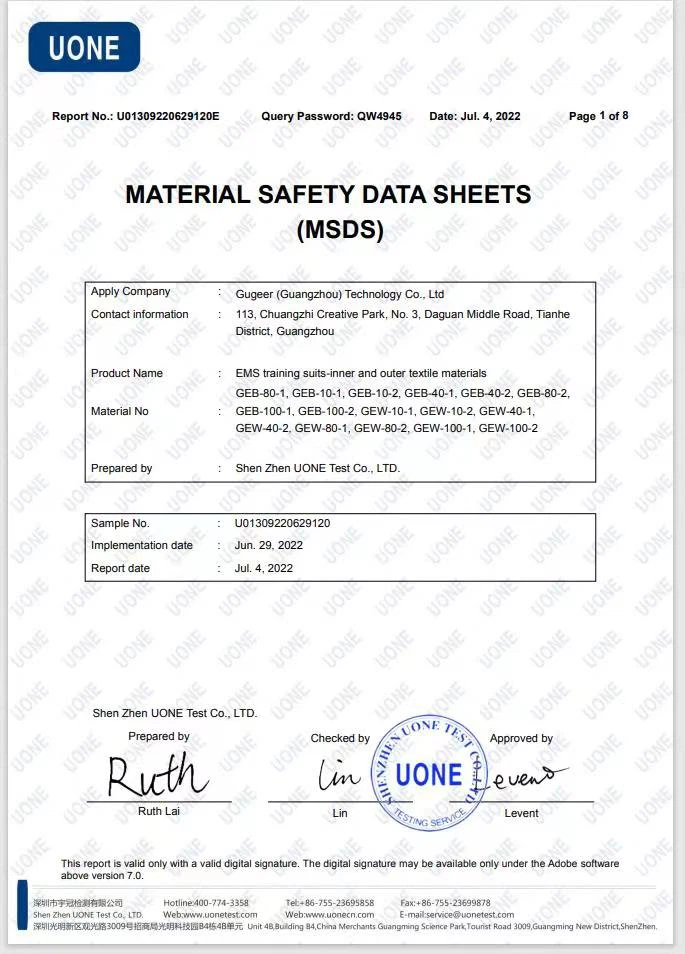
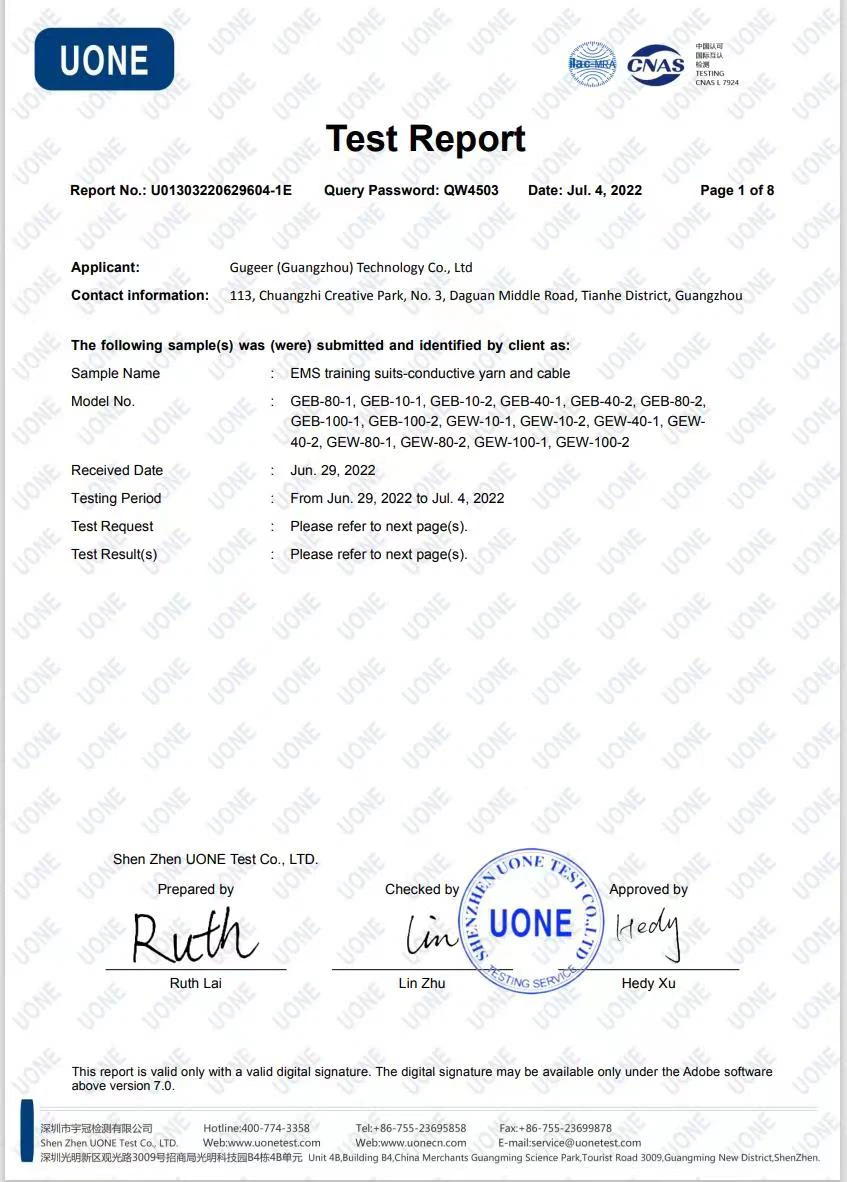
Gugeer had applied for certifications such as CE, FCC, RoHS. Each prodcution process is under strict quality check.
High cost-effective price
Provide reasonable price and best quality product to achieve long-term business
Best service
Response your inquiry as fast as possible.Offer professional solutions and solve after-service problems you facing.
Basic details of the product
Product advantage
1. Various ems suit styles
Provide different ems suit styles for clients to meet their requirement.Suits as follows, vest ems training suit, dry ems training suit at home, undergerment for ems workout,etc.
2. Customization on suit
To build business relationshion friendly, Gugeer customize any ems training suit for clients.
3. Durability
Because of good quality materials of suit and components Gugeer takes, it can be lengthen the lifetime and be durable to use.
4. Stability
Under the maintenance of our professional technique team, software is stable to use and impulse stimulation outputs averaged.
Product Application
The EMS Workout equipment promotes full-body toning, weight loss, metabolism boosting,etc. Generally, it is used in gym studio, beauty salons. Difference EMS training suits from Gugeer can be chosen no matter you are professional or personal.
Material of the product
Product is composed of various composite materials.It is soft and breathable to wear. The material of components has advantages of anti-oxidation and being waterproof.
Component Composition Of The Product
Equipped with power box and electrodes, Wireless EMS suit can stimulate deep muscle group through controlling system.
Product Maintenance And Precautions
- Do not dry clean.
- Take off electrodes before washing.Wash the suit in the included mesh laundry bag, do not turn it inside out.
-
![EMS Workout Suit]()
-
![Ems Machines for Home Use]() Ems Machines for Home UseGugeer EMS does not impose any burden on the body, and can help the body to repair, strengthen human bones, and improve blood circulation.read more
Ems Machines for Home UseGugeer EMS does not impose any burden on the body, and can help the body to repair, strengthen human bones, and improve blood circulation.read more -
![Ems in Physical Therapy]() Ems in Physical TherapyMuscle stimulator physiotherapy can prevent muscle atrophy, recover from sports injuries, improve muscle endurance, and assist in fitness and fat reduction.read more
Ems in Physical TherapyMuscle stimulator physiotherapy can prevent muscle atrophy, recover from sports injuries, improve muscle endurance, and assist in fitness and fat reduction.read more -
![Muscle Stimulator Physiotherapy]() Muscle Stimulator PhysiotherapyEMS treatment can prevent muscle atrophy, help the rehabilitation treatment of sports injury, improve muscle endurance, and help reduce fat and shape.ems treatmentread more
Muscle Stimulator PhysiotherapyEMS treatment can prevent muscle atrophy, help the rehabilitation treatment of sports injury, improve muscle endurance, and help reduce fat and shape.ems treatmentread more -
![Electronic Muscle Stimulation Therapy]() Electronic Muscle Stimulation TherapyElectronic muscle stimulation therapy uses electric pulse to generate muscle contraction to help muscle strengthen and prevent muscle atrophy. The use of EMS can treat people who have muscle...read more
Electronic Muscle Stimulation TherapyElectronic muscle stimulation therapy uses electric pulse to generate muscle contraction to help muscle strengthen and prevent muscle atrophy. The use of EMS can treat people who have muscle...read more -
![Muscle Stimulator Use]() Muscle Stimulator UseMuscle stimulator use training is very friendly. It can give corresponding benefits to some paralyzed patients and enhance muscle strength. EMS training equipment has been widely used for physical...read more
Muscle Stimulator UseMuscle stimulator use training is very friendly. It can give corresponding benefits to some paralyzed patients and enhance muscle strength. EMS training equipment has been widely used for physical...read more -
![Electrical Muscle Stimulation Devices]() Electrical Muscle Stimulation DevicesMuscle stimulator use training is very friendly. It can give corresponding benefits to some paralyzed patients and enhance muscle strength. EMS training equipment has been widely used for physical...read more
Electrical Muscle Stimulation DevicesMuscle stimulator use training is very friendly. It can give corresponding benefits to some paralyzed patients and enhance muscle strength. EMS training equipment has been widely used for physical...read more -
![Ems in Physiotherapy]() Ems in PhysiotherapyIt can support wireless connection of Android phones and tablets, and can choose from any ten conventional sizes, which can be customized.read more
Ems in PhysiotherapyIt can support wireless connection of Android phones and tablets, and can choose from any ten conventional sizes, which can be customized.read more -
![Ems Muscle Therapy]() Ems Muscle TherapyThe EMS suit is made of high elastic fabric, which is close to the body, and the electrode is anti-oxidation.read more
Ems Muscle TherapyThe EMS suit is made of high elastic fabric, which is close to the body, and the electrode is anti-oxidation.read more -
![Ems Muscle Recovery]() Ems Muscle RecoveryEMS muscle recovery stimulates muscle contraction through electric pulse, strengthens muscle strength, promotes blood circulation, and repairs and strengthens muscles and joints.read more
Ems Muscle RecoveryEMS muscle recovery stimulates muscle contraction through electric pulse, strengthens muscle strength, promotes blood circulation, and repairs and strengthens muscles and joints.read more


What is Electrical Muscle Stimulation (EMS)?
EMS involves the application of an electrical current, usually across the surface of the skin using adhesive or rubber electrodes positioned on the skin in direct proximity to the muscles to be stimulated, to generate a muscle contraction. This muscle contraction takes place due to the electrical current travelling into the tissues and causing a depolarisation of an intact motor neuron that carries the signal to the target muscle through synaptic transmission to the motor end plates. The resultant muscle contraction can range from a small muscle twitch, to a powerful enough contraction to cause a physiological movement at the joint(s). This alteration of a produced muscle contraction is the result of the manipulation of the available electrical stimulation parameters controlled by the clinician. Most EMS units share the same parameters for adjustment. These are: Frequency, Amplitude and Pulse Width. The clinician requires to become confident in the manipulation of these parameters to use EMS effectively.

Ems Therapy Electrical Stimulation Parameters
Frequency refers to the number of stimulation pulses delivered per second, measured in Hertz (Hz). At a low frequency (1-10Hz), a weak muscle twitch or flutter will be generated. As frequency is increased (more pulses delivered per second), so does the strength of the contraction created up to around 60-70Hz, at which point the frequency has more effect upon the sensory rather than motor neurons and the power of the muscle contraction reduces. EMS devices will offer a frequency within a set range (0-70Hz), some devices may only provide one set level of frequency, others will provide the option to adjust the frequency within a pre-set range. Information about the EMS device stimulation parameter range can normally be found in the instruction guide that comes with each device.
Pulse width refers to the length of time each group of pulses of stimulation is set to, measured in microseconds (us); or milliseconds on devices offering EMS for peripheral nerve damage (ms). It is common to see EMS devices offering ranges between 200-300us. Pulse width on some devices will be pre-set and on others can be adjusted. A short pulse width can be more comfortable for some patients but a longer pulse width may recruit more motor neurones and thus improve the muscle contraction produced.
Amplitude (sometime referred to as intensity) refers to the strength of the stimulation delivered, measured in milliamps (mA). The amplitude needs to be high enough to evoke the desired affect while still remaining comfortable. This parameter is always adjustable in EMS devices and often appears like a volume switch. Adjustment of this parameter is always available as amplitude may not always be set to the same level at each treatment session. As the muscle gets stronger it may require less amplitude to effect the same response, or, if the electrode position is not optimal more amplitude may be required to produce the same muscle contraction. It is therefore important for the patient and therapist to understand what level of muscle contraction is desired during each session so the intensity can be varied accordingly.
Balancing the amplitude and the pulse width can help to optimise both the muscle contraction produced and the comfort for the patient i.e. a wider pulse duration may mean the amplitude can be reduced offering more comfort.
Confidence in the use of EMS devices grows as the clinician learns to use these parameters to their advantage therapeutically; understanding what to expect as each parameter is changed in isolation or in combination. The best way to experience and practice this initially is on yourself, or on a colleague, in order to practice in a more controlled and contained environment; noticing how each dial setting affects the extent of muscle contraction, or what the stimulation feels like, so you can advise your patient before use.
Most small EMS devices are powered by household batteries, all are very unlikely to deliver enough electricity to cause harm (see contraindications below); this is more usually the number one reason therapists are not confident in applying stimulation initially. Always keep in mind you are reproducing a normal muscle contraction.
Summary of how EMS parameters affect muscle contraction
| Parameter | Adjustment | Effect |
| Frequency | Low (1-10Hz) | Muscle twitch, maybe less comfortable but less fatigue. Good for heavily atrophied muscle |
| Medium (20-60Hz) | Tetanic muscle contraction sufficient for physiological joint movement. Good for functional tasks | |
| High (>60Hz) | Tetanic contraction will gradually diminish as sensory response becomes stronger. May feel more tingly distal to the electrodes | |
| Pulse width | Low (50-200us) | Weak, superficial contraction but will feel less intense and will be less likely to overflow. Good for smaller muscle groups |
| Medium (200-350us) | Stronger contraction recruiting more motor fibres but may begin to overflow in smaller muscles | |
| High (350-500us) | Powerful contraction, will feel deeper and more intense. Good for larger muscle groups | |
| Amplitude | Low | Weak response but comfortable |
| High | Stronger response but may become intolerable |
Contraindications and Precautions to the use of Ems Therapy
Contraindications for each device will be specified in the instructions that support each item of EMS equipment. The EMS representatives, or medics involved in the care of the patient, should also be contacted with any queries.
When considering contraindications and risks to treatment consider what may be contraindicated by a normal muscle contraction and an element of increased blood flow to the area. Electrical stimulation should not be used were active movement would not be appropriate e.g. a muscle contraction that will evoke movement around an unstable fracture. There is also not enough evidence to support the benefits versus the risks of use with pregnancy. The presence of tumours, broken skin and implanted metal work should also be a consideration and should be discussed with medical staff and EMS representatives but may be a precaution rather than an absolute contraindication. Compatibility with other types of implants i.e. pacemakers and baclofen pumps should also be considered prior to use.
Some patients may have sensation or the ability to feel the effects of the electrical current flow. In this instance EMS must be comfortable if treatment is to be successful and to be repeated. Age is not a contraindication to the use of EMS but something that may prevent you providing a second treatment to a wary child (or adult) if not approached in the right way. Comfort can be maximised by the adjustment of electrical stimulation parameters. The key message is start conservatively, you can always increase your stimulation parameters to effect a better contraction next time, but if you start too high, you may lose compliance.
The application of Ems Therapy


Once you are comfortable with the basics of delivering EMS the aims of treatment should be considered. If new to EMS, choose a simple device that offers flexibility but has some pre-set programmes to start you off. If you are more confident using EMS, consider a device with more channels of stimulation, thus allowing stimulation of multiple muscle groups with greater flexibility; this will enable therapy to be more functional. If you have a specific aim in mind, such as stepping during gait, a Functional Electrical Stimulation (FES) device that is triggered by function may be a good decision i.e. drop foot stimulation. Or if you want more channels and more whole body activity (to affect overall physical health), then an EMS cycling, rowing or stepping system may be indicated.
Whichever device you choose, there are a few considerations that are largely universal:
Electrode selection - choose an electrode that is appropriately sized and shaped for the target area - multiple and varied options are available. More coverage of the chosen muscle will activate more of the muscle (gaining a better contraction), however too large and the electrical stimulation will leak into other muscle groups affecting the quality of your muscle action/contraction. Electrodes that adhere to the skin are generally single patient use, but rubber electrodes can also be used with contact gel and tape to secure. Single patient use/sticky electrodes require to be stored on the Teflon coated seal it arrives on and in an airtight package to maintain the stick, but will generally dry out and require replacement after a period of time (approximately 6 weeks dependent on use). Rubber electrodes require washing in between use but generally have a much longer shelf life.
Electrode placement - different devices will provide different guidance as to where the electrodes should be placed. However in all cases try to ensure the electrodes are positioned over the muscle to be affected and you are moving the body into either anatomical neutral, or into the position with which they will assume to perform an activity. For example, if you are trying the stimulate wrist extension and place the electrodes with the forearm in pronation, if you then supinate for the therapy, the effect and movement will be changed.
Skin surface - make sure the area the electrodes will be placed is clean and dry (moisturised/oily skin will prevent the electrodes adhering to the skin). Dense hair may need to be clipped.
Time - As with any muscle training, a weak muscle will fatigue more quickly. Short sessions may be required initially, building to longer sessions. Some devices have pre-set programmes with pre-set parameters and session times. When considering treatment time the therapist should consider how many repetitions are achieved in each treatment session and how this compares to more conventional muscle strengthening to evoke an increased in strength or quality of muscle movement.
EMS Indications in Therapy
Despite the slow uptake of EMS as a rehabilitation tool in the UK there is a wealth of evidence about the effects of this type of modality for a range of neuromuscular conditions in adults and children including stroke, spinal cord injury, ABI and cerebral palsy; in some areas EMS is more evidence based than some more conventional physiotherapy adjuncts. Areas indicated for use that may impact your own patient case load include:
Reversal of muscle atrophy and improved muscle strength.
Support of function - i.e. stepping of the foot during gait
Improved local circulation and reduction in skin breakdown.
Increase / maintenance in joint range of motion.
Reduction of spasticity / muscle spasms.
Increase in cardiovascular function - via simultaneous activity of large muscle groups.
Habilitation - learning new activity via movement normally unobtainable.
Maintenance of bone density.
Restorative therapy - CNS cell birth & CNS myelination.

How Electrical Stimulation Is Used in Physical Therapy
Electrical stimulation involves sending electrical currents through the skin and into muscles. This may help reduce pain, stimulate tissue healing, and strengthen muscles.
If you have an injury, your healthcare provider may order physical therapy to help you on the road to recovery. Along with other forms of treatment, you may receive electrical stimulation as part of your therapy.
Why E-Stim Is Used
Electrical stimulation is used for many reasons in physical therapy. It can be used to:
Provide medication for inflammation.
Improve muscles that are weak or not functioning correctly.
Help decrease pain or spasms.
If you are experiencing pain, spasms, inflammation, or muscle weakness, your physical therapist may use this treatment to help you.
Some of the medical conditions treated with e-stim include:
Low back pain.
Post-surgical pain.
Muscle weakness or poor motor control.
Tendonitis.
Bursitis.
E-stim has also been used to help treat stubborn wounds.2 A physical therapist who is a wound care specialist would be the professional who provides this treatment for you.
Our Factory
Our factory is located in Guangzhou, covering an area of 1000 square meters. We can design and produce any EMS equipment according to customer requirements. Our factory enjoys a high reputation at home and abroad with first-class quality, competitive price, accurate shipment and considerate service. Service: OEM service We provide one-stop star service for customers: clothing style customization, logo color customization, energy box system customization, etc. Our goal is to provide customers with high-quality and reliable products and accurate delivery. We focus on customer needs, value and satisfaction. We will strive to become one of the top suppliers in the EMS field.

Our certificate
Our company has applied for certifications such as CE, RoHS,FCC which are approved by EU. Thanks for these certifications, Gugeer ems workout suit have more opportunities to access in this market.



fAQ
Q: What is EMS therapy?
A: EMS therapy is a form of physical therapy that uses electrical stimulation to contract muscles. This therapy is usually used when people are unable to contract their muscles on their own, such as after a surgery or stroke.
Q: How does EMS therapy work?
A: EMS therapy works by sending electrical impulses to the muscles through electrodes placed on the skin. These impulses cause the muscles to contract, leading to increased strength and improved blood circulation.
Q: Is EMS therapy painful?
A: EMS therapy is generally not painful, although some people may feel mild discomfort during the procedure. The intensity of the stimulation can be adjusted to ensure the patient is comfortable.
Q: What conditions can be treated with EMS therapy?
A: EMS therapy can be used to treat a range of conditions, including muscle weakness and atrophy, sports injuries, and chronic pain.
Q: How long does EMS therapy last?
A: The length of a single EMS therapy session can vary based on the patient's needs, but the typical duration is around 30 minutes.
Q: How many sessions of EMS therapy are needed?
A: The number of sessions needed will vary depending on the severity of the condition being treated and the patient's response to therapy. Generally, patients will undergo several sessions of EMS therapy over the course of a few weeks or months.
Q: Are there any side effects of EMS therapy?
A: Some people may experience mild skin irritation where the electrodes are placed, but this usually goes away quickly. There is a risk of muscle soreness or cramping after treatment, but this can be minimized with proper stretching and hydration.
Q: Can EMS therapy be done at home?
A: EMS therapy can be done at home using specialized devices. However, it is important to be trained on the proper use of the device and to follow instructions from a healthcare provider to ensure safe and effective treatment.
Q: What does EMS therapy do?
A: Electrical muscle stimulation (EMS) is a type of electrotherapy stimulates a muscle contraction using electrical impulses in order strengthen weak muscles, reduce swelling, relieve pain and help heal wounds.
Q: Does EMS stimulation really work?
A: Stimulating muscles repeatedly with electricity may eventually result in muscles that are strengthened and toned to some extent but will not, based on currently available data, create a major change in your appearance without the addition of diet and regular exercise.
Q: What is the difference between tens and EMS?
A: TENS and EMS units use electrical currents. TENS devices may treat pain, while EMS devices may stimulate and strengthen your muscles. It's currently unclear just how effective these devices are and more, larger-scale research is needed to confirm how well they work.
Q: Does EMS reduce belly fat?
A: Multiple scientific studies have shown the incredible effectiveness of EMS training for weight loss including belly fat loss. Electro Muscle Stimulation training has been demonstrated to reduce abdominal obesity as well as decreasing waist circumference, subcutaneous fat mass, and body fat percentage.
Q: Is it OK to use EMS everyday?
A: We do not recommend that EMS training is done every day.
Remember that not every EMS device out there will be safe.
Q: How long does it take to see results with EMS?
A: By now, you should start to see the physical effects of your Electro Muscle Stimulation. Whatever your goal was – whether that be a visible 6 pack, slightly more toned arms and legs or an all-round beach-ready body, this is when you can start to see results.
Q: How quickly does EMS work?
A: Most people normally see visible results after four EMS training sessions. The time it takes to see the results may differ depending on your current fitness levels, your lifestyle, your body type, and your body weight. Some people may show results after only a few sessions, while it could take longer for others.
Q: Who should avoid EMS?
A: Individuals with certain medical conditions or implanted medical devices may be at risk of complications from EMS. Pregnant women and individuals with epilepsy or a history of seizures should also avoid EMS. It is important to note that EMS should not be used as a substitute for regular exercise.
Q: Where not to use EMS?
A: Additionally do not use with an internal electrode if you have: Broken/irritated skin in the rectal, vaginal or perineal area. Rectal bleeding or haemorrhoids. Bladder or vaginal infections.
Q: Can EMS burn fat?
A: EMS technology stimulates over 90% of your muscle mass helping you to add lean muscle and boost your metabolism so you burn fat more efficiently. For example, it's not easy to lose inches from your midsection but EMS workouts are highly effective in the fight against belly fat.
Q: Is EMS good for back pain?
A: Electrical Muscle Stimulation (EMS) is a popular treatment for back pain, neck pain, muscle tightness, and muscle spasms. EMS technology delivers effective, affordable pain relief that many people also find very soothing.
Q: Does EMS get rid of cellulite?
A: The EMS method of training generates faster blood flow to the muscles you're targeting. This is one of the best ways of reducing cellulite in key areas – so EMS training can really help you target your cellulite.
As one of the leading ems therapy manufacturers and suppliers in China, we warmly welcome you to wholesale customized ems therapy from our factory. All OEM/ODM products are with high quality and competitive price. Contact us for more details.
Ems in Physiotherapy, Ems Muscle Therapy, Ems in Physical Therapy